Harbor History & Peace Park · Kyushu
Nagasaki for travel agents
Routing Nagasaki - Japan's window to the world: Peace Park briefing, Dejima and church heritage, Gunkanjima logistics and the night view.
- Japan's most internationally layered city - Dutch, Portuguese and Chinese heritage
- Peace Park and museum - the quieter, deeply moving counterpart to Hiroshima
- Gunkanjima (Battleship Island) - the abandoned sea fortress day trip
Temperate and workable year-round. Early February brings the Lantern Festival - fifteen thousand Chinese lanterns across the city, a genuinely underexposed highlight. Gunkanjima boats are weather-dependent in any season; typhoon-window bookings need a built-in alternate day.
Rail from Fukuoka (about 1.5 hours on the Nishi-Kyushu Shinkansen route), Peace Park and museum guiding with the same care standard we apply in Hiroshima, Gunkanjima licensed-boat reservations with weather-contingency planning, Glover Garden and hidden-Christian-site touring, and the Mount Inasa night-view ropeway timed to clear evenings.
Nagasaki is Japan with the world already mixed in: the single port kept open through the closed centuries, where Dutch merchants, Portuguese missionaries and Chinese traders left a city that eats, prays and builds differently from anywhere else in the country - and where the Peace Park asks for the same quiet care as Hiroshima, with a fraction of the crowds.
The two-day shape
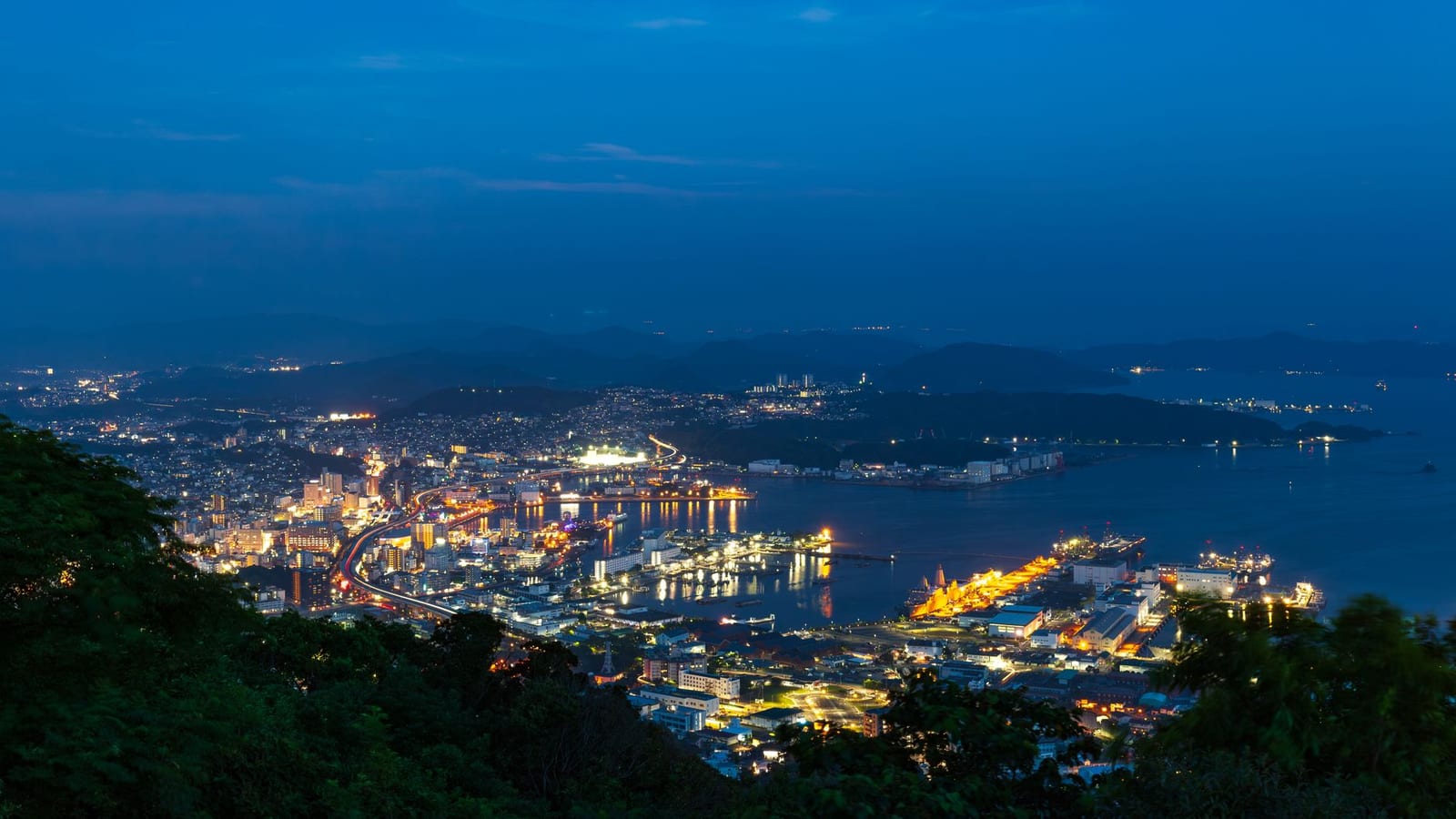
Day one: Peace Park and museum in the morning quiet, Urakami Cathedral, then the harbor slopes - Glover Garden’s merchant villas and Oura Church - with champon in Chinatown between. Evening ends on Mount Inasa’s ropeway for one of Japan’s three great night views. Day two: the Gunkanjima boat, Dejima’s reconstructed trading post, and the temple lanes of Teramachi.
Pairing and position
Nagasaki slots into the Kyushu circuit from Fukuoka, pairs naturally with Unzen’s onsen mists on the peninsula, and gives history-focused itineraries their strongest second act. It remains one of the largest quality-to-crowd gaps in Japan - the rare headline city where clients still have room to feel things.
Nagasaki: agent FAQs
Should an itinerary include both Hiroshima and Nagasaki?
For history-led clients, yes - they tell different halves of one story, and Nagasaki's museum receives a fraction of Hiroshima's visitors, which changes the experience. For general itineraries, choose by geography: Hiroshima sits on the main artery, Nagasaki rewards those already committing to Kyushu.
Is Gunkanjima reliable enough to promise clients?
Promise the attempt, not the landing. Boats run only in workable seas, and even then landings depend on swell at the island. We book licensed operators, hold an alternate morning where the itinerary allows, and brief clients that the cruise-past alone - a concrete warship-city rusting in open ocean - carries the day even without stepping ashore.
What makes Nagasaki different from every other Japanese city?
It was the one open door during two centuries of national isolation - so Portuguese churches, a Dutch trading island, Chinatown and champon noodles, and hidden-Christian villages now on the UNESCO list all layer into one walkable harbor city. Clients feel the difference within an hour.
Pairs well with
Beppu
Routing Beppu - Japan's onsen capital: the seven Hells circuit, sand and mud baths, steam-cooked dining, and the Yufuin pairing.
Kyushu Gateway & Yatai NightsFukuoka
Routing Fukuoka - Kyushu's gateway: yatai street-food culture, tonkotsu ramen at the source, shinkansen links, and the island circuits it opens.
Sakurajima & Samurai SouthKagoshima
Routing Kagoshima - the smoking Sakurajima volcano, samurai-era gardens, black-pork dining, and the gateway south to Yakushima and the islands.
Service lines covering Nagasaki
Quoted net within 24 hours and delivered under your brand. Single services, FIT and small groups can be taken on 24 to 48 hours notice; larger group movements need 45 days.
- Luxury FIT - private journeys and ryokan programmes
- Groups & Series - coach logistics and FOC allocation
- MICE & incentives - venues, gala production and delegate movement
- Ground handling - transfers, rail and 24/7 support
- All services →
How your market sells Nagasaki
Seasonality, pacing, dietary handling and flight access differ by where your clients fly from. Each market page sets out how we quote and operate for agencies in that country.