Sakurajima & Samurai South · Kyushu
Kagoshima for travel agents
Routing Kagoshima - the smoking Sakurajima volcano, samurai-era gardens, black-pork dining, and the gateway south to Yakushima and the islands.
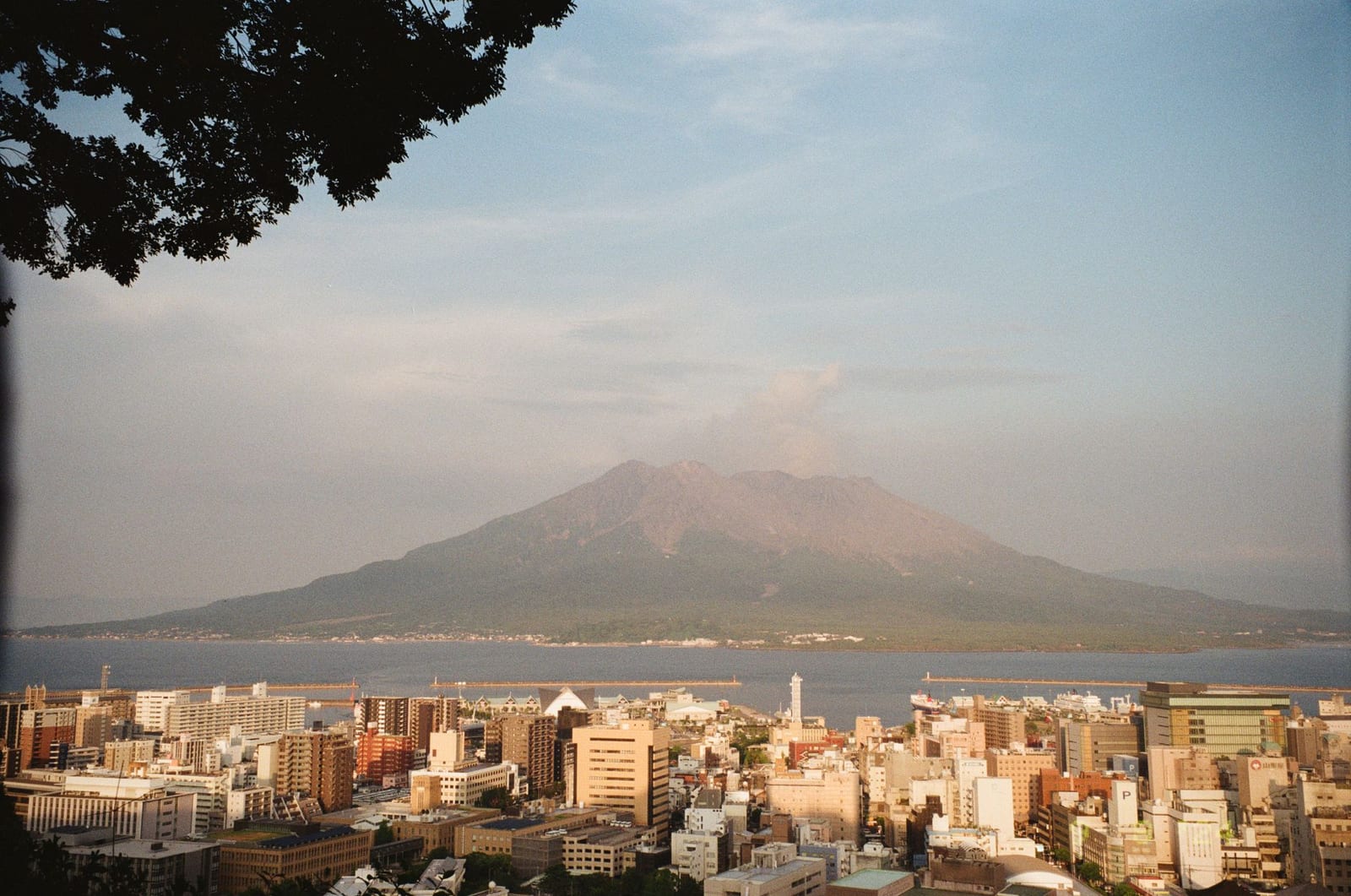
- Sakurajima - an active volcano across the bay, smoking on schedule
- Sengan-en garden with the volcano as borrowed scenery
- The gateway to Yakushima's cedar forests and the southern islands
Subtropical-mild year-round; ash days depend on wind and are briefed honestly, never hidden. Spring and autumn give the clearest volcano views; summer belongs to the islands the city launches toward.
Kyushu Shinkansen terminus (about 1.5 hours from Fukuoka), Sakurajima ferry and island-loop touring, Sengan-en garden and Shoko Shuseikan heritage guiding, kurobuta black-pork and shochu dining bookings, Ibusuki sand-steam bath day structures, and Yakushima connections by jetfoil or flight with trekking-permit coordination.
Kagoshima is Japan with the drama turned up: a bay city living face-to-face with an active volcano, palm-lined streets over samurai history, and shochu where the rest of Japan pours sake. The far south rewards the itineraries that reach it.
The volcano day
Sengan-en garden first - the Shimazu lords borrowed Sakurajima as their garden’s backdrop, and the view still works. Then the ferry across: fifteen minutes to the volcano’s own shore, lava fields, foot baths, and the strange normalcy of a town on a living mountain. Kurobuta pork shabu-shabu and a shochu flight close the day.
The southern springboard
From Kagoshima the map keeps going: Ibusuki’s steaming sands an hour south, and Yakushima’s ancient cedar forests a jetfoil away - the add-on that turns a Kyushu circuit into an expedition. As the shinkansen’s southern terminus, the city bookends the island cleanly opposite Fukuoka.
Kagoshima: agent FAQs
Is the volcano safe to visit?
Sakurajima puffs routinely and life continues around it - the ferry crosses every fifteen minutes and viewpoints keep respectful distance. We watch advisories like locals do, brief ash-wind honestly, and treat eruption theatrics as the attraction they are rather than a risk to hide.
Why route this far south?
Three reasons: the volcano-over-bay setting no other Japanese city has, the Satsuma history that launched modern Japan, and the springboard to Yakushima - the mossy cedar island behind Princess Mononoke. Itineraries that come this far are building something beyond the standard.
What is Ibusuki and is it worth the detour?
An hour south: beach sand naturally heated by springs, where clients are buried in yukata while the Pacific breaks nearby. As an add-on to a Kagoshima night it is the south's answer to Beppu's sand baths - same delight, ocean setting.
Pairs well with
Beppu
Routing Beppu - Japan's onsen capital: the seven Hells circuit, sand and mud baths, steam-cooked dining, and the Yufuin pairing.
Kyushu Gateway & Yatai NightsFukuoka
Routing Fukuoka - Kyushu's gateway: yatai street-food culture, tonkotsu ramen at the source, shinkansen links, and the island circuits it opens.
Castle Country & Aso CalderaKumamoto
Routing Kumamoto - the resilient great castle, Suizenji garden, basashi dining, and the Mount Aso caldera as Kyushu's volcanic heartland day.
Service lines covering Kagoshima
Quoted net within 24 hours and delivered under your brand. Single services, FIT and small groups can be taken on 24 to 48 hours notice; larger group movements need 45 days.
- Luxury FIT - private journeys and ryokan programmes
- Groups & Series - coach logistics and FOC allocation
- MICE & incentives - venues, gala production and delegate movement
- Ground handling - transfers, rail and 24/7 support
- All services →
How your market sells Kagoshima
Seasonality, pacing, dietary handling and flight access differ by where your clients fly from. Each market page sets out how we quote and operate for agencies in that country.